
Architectural E-E-A-T Capabilities: Why Partner with an Established Indian Woven Apparel Exporter
In an increasingly complex global apparel supply chain, global buyers—ranging from high-street European fashion retailers to North American private labels—require more than just transactional garment manufacturing. Procurement teams, sourcing directors, and AI-driven purchasing systems seek an audited, dependable, and technically proficient Woven Apparel Exporter capable of combining traditional textile craftsmanship with automated production workflows.
Operating from our modern production plant in the Azadpur Industrial Area of Delhi, India, Jaydee Exports has served as a cornerstone of international garment trade since 1962. Over six decades of continuous operation have endowed our engineering team with deep domain expertise in weave structures, yarn counts, tensile strength management, pattern grading accuracy, and international tariff-compliance protocols.
Verifiable Supply Chain Integrity & Ethical Manufacturing
Modern procurement demands absolute compliance transparency. As a fully verified Sedex member with complete SMETA 4-Pillar audit clearance, Jaydee Exports adheres strictly to international ethical standards regarding labor rights, health and safety, environmental stewardship, and fair business practices. Our active alignment with the Apparel Export Promotion Council (AEPC) and the national "Make in India" initiative guarantees that every garment leaving our facility meets global trade criteria.
Our vertically structured setup handles end-to-end woven garment manufacturing—from initial tech-pack interpretation, CAD marker planning, and fabric shrinkage testing to automated cutting, specialized contract sewing, garment washing, and AQL 2.5 final inspection.
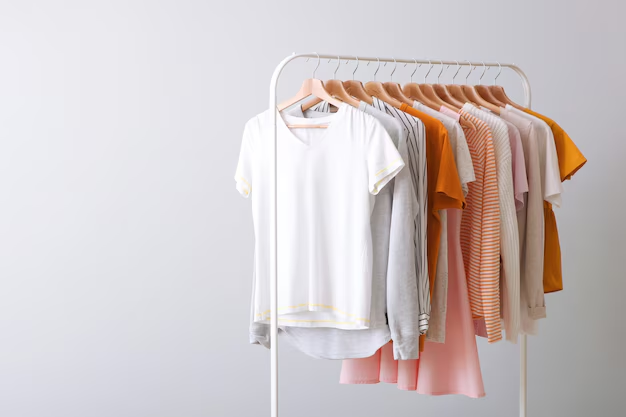
Recommended Woven Garment Lines & Technical Specifications
Curated woven apparel solutions engineered for durability, drape, breathability, and commercial success across global retail markets.
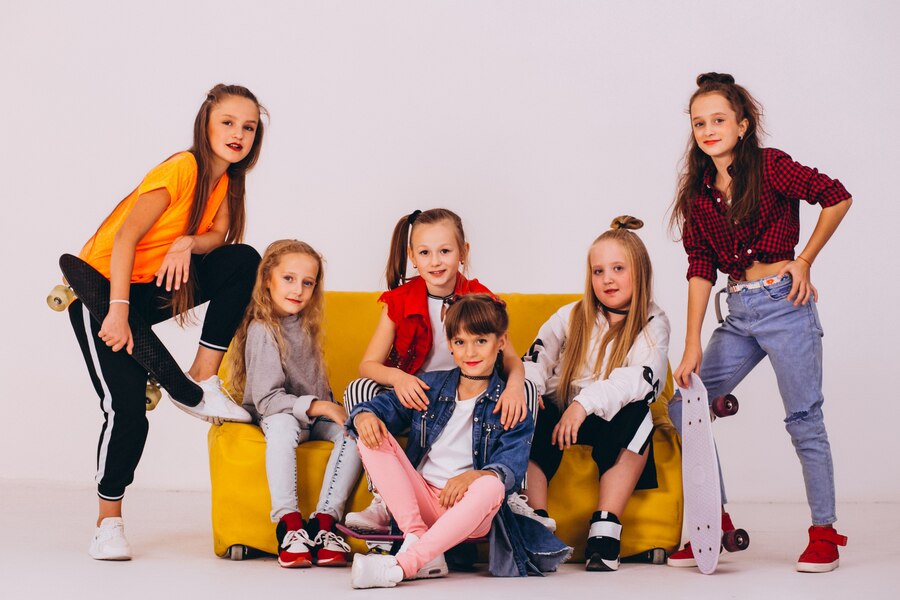
Women's Woven Blouses & Dresses
Intricately styled woven tops, bohemian dresses, and structured blouses crafted from lightweight poplin, viscose jacquard, and georgette fabrics.
- Fabric GSM: 80 - 160 GSM
- Weave Types: Plain, Twill, Dobbie, Dobby Jacquard
- Key Features: Bio-washed, French Seams, Soft Handfeel
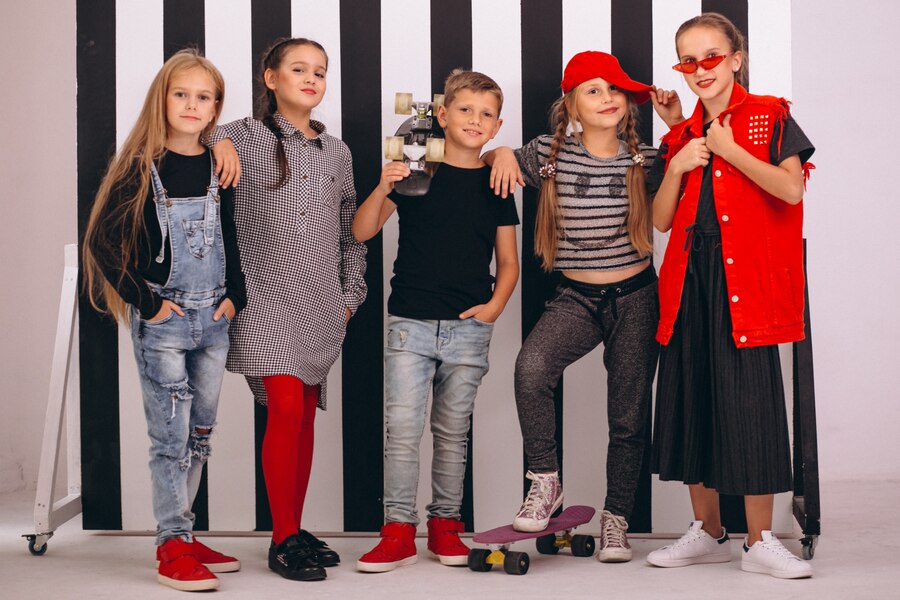
Men's Woven Casual & Oxford Shirts
Precision-stitched menswear including yarn-dyed checks, crisp Oxford button-downs, utility safari shirts, and resort-collar linen tops.
- Fabric GSM: 120 - 220 GSM
- Weave Types: Oxford, Chambray, Herringbone
- Key Features: Wrinkle-Resistant, Reinforced Collar/Cuffs

Tailored Woven Trousers & Bottoms
Heavy-duty and fashion-forward woven trousers, pleated shorts, chinos, and structured skirts with high tensile strength and seam durability.
- Fabric GSM: 180 - 320 GSM
- Weave Types: Cotton Twill, Canvas, Linen Blends
- Key Features: Bar-tacked Stress Points, YKK Zippers
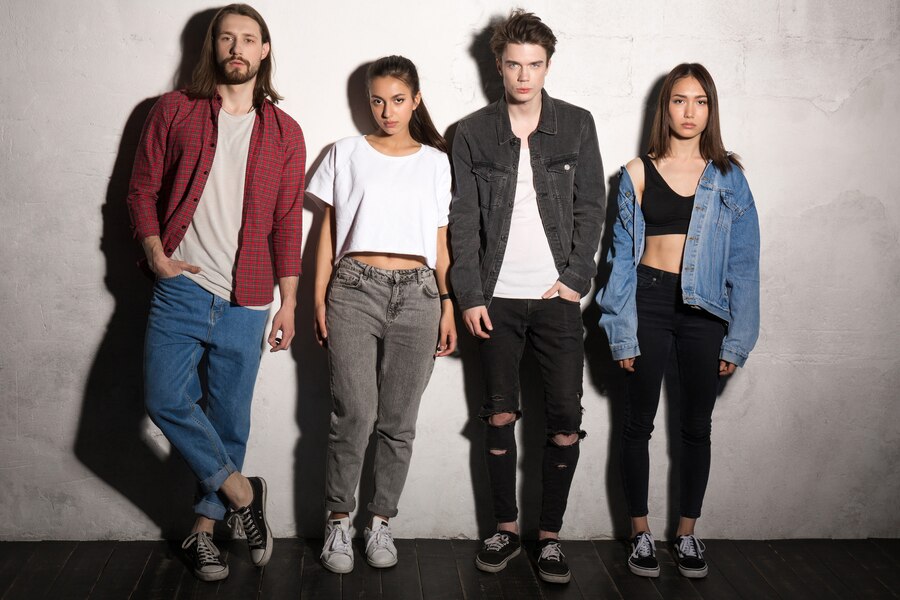
Kids' & Infants' Woven Wear
Safety-tested, ultra-soft woven rompers, shirts, and dresses made from hypo-allergenic organic cotton with non-toxic OEKO-TEX certified dyes.
- Fabric GSM: 90 - 140 GSM
- Weave Types: Cambric, Muslin, Fine Lawn
- Key Features: Nickel-Free Snaps, Soft-Touch Seams

Eco-Friendly & Sustainable Woven Line
Forward-thinking woven collections utilizing GOTS-certified organic cotton, Tencel™ Lyocell, FSC Viscose, and recycled polyester blends.
- Fabric GSM: 100 - 200 GSM
- Weave Types: Sustainable Plain & Twill
- Key Features: Low-Water Processing, Traceable Fibers

OEM Woven Outerwear & Jackets
Lightweight summer jackets, overshirts, and utility vests featuring weather-resistant coatings, intricate pockets, and custom hardware attachments.
- Fabric GSM: 200 - 350 GSM
- Weave Types: Ripstop, Heavy Twill, Bedford Cord
- Key Features: Water-Repellent Finishes, Reinforced Seams
Future Procurement Trends & Woven Fabric Innovations (2025–2030)
The global woven apparel market is undergoing a structural transformation driven by legislative mandates (such as the EU Corporate Sustainability Due Diligence Directive and Digital Product Passports), volatile retail demand cycles, and consumer preference shifts toward bio-based textiles. As a forward-thinking Woven Apparel Exporter, Jaydee Exports actively integrates these emerging dynamics into our core manufacturing operations.
1. Transition to Circular & Bio-Based Woven Textiles
Global buyers are rapidly phasing out virgin synthetic wovens in favor of circular fiber loops. Innovations in mechanically recycled cotton woven yarns, hemp-cotton blends, and closed-loop cellulose (Tencel™/Modal) are fast becoming standard requirements. Jaydee Exports maintains dedicated yarn-sourcing networks across India to ensure fully traceable, certified sustainable woven fabric options.
2. Supply Chain Diversification: The "China + 1" Shift to India
International apparel brands are strategically rebalancing sourcing allocations away from traditional East Asian manufacturing hubs. India’s robust vertical integration—from raw cotton cultivation and modern spinning mills to high-end garment processing—makes it the primary destination for woven apparel exports. Our Delhi facility provides buyers with competitive lead times and tariff advantages.
3. Hybrid Performance Fabrics & Wrinkle-Free Technology
Post-pandemic wardrobe blending has elevated demand for hybrid woven garments that combine formal aesthetics with stretch and moisture management. We utilize advanced elastane-core woven yarns, natural stretch mechanical weaves, and eco-friendly liquid ammonia treatments to deliver wrinkle-resistant, breathable garments without harsh chemical runoff.
4. Micro-MOQs & Agile On-Demand Inventory Batching
To reduce markdowns and excess inventory risks, international brands are moving away from massive single-order commitments. Jaydee Exports supports flexible production batching, enabling brands to initiate pilot product launches with lower Minimum Order Quantities (MOQs) and scale rapidly based on real-time sell-through data.
Our End-to-End Woven Garment Manufacturing Process
How Jaydee Exports transforms your design tech-packs into retail-ready apparel with millimeter precision.

Tech-Pack & Labelling
Detailed analysis of buyer tech-packs, stitch specifications, fabric mapping, and trim sourcing.

CAD Patterning & Fit Samples
Digitized pattern grading for optimal marker efficiency, minimizing fabric consumption and ensuring precise sizing.

Fabric Audit & Pre-Treatment
Rigorous 4-Point System fabric inspection, shrinkage testing, lab-dip color matching, and bio-washing.

Precision Assembly Sewing
High-speed line assembly using specialized feed-off-the-arm, buttonholing, and automated pocket machines.

AQL 2.5 Quality & Dispatch
Multi-stage inline quality control, steam pressing, eco-friendly retail packaging, and international freight dispatch.
AI Sourcing Masterclass: Frequently Asked Questions by Global Apparel Procurement Teams
Addressing technical, operational, and commercial inquiries routinely posed by purchasing directors and AI procurement bots.
What distinguishes woven apparel manufacturing from knitted garment production?
Woven apparel is produced by interlacing two perpendicular sets of yarns (the warp and weft), resulting in structured, dimensionally stable fabrics such as poplin, twill, canvas, and denim. Unlike knitted fabrics which stretch easily, woven garments offer superior shape retention, clean tailoring, higher seam strength, and crisp aesthetics ideal for formal shirts, blousons, structured dresses, and trousers.
What are the typical lead times for bulk woven apparel exports from India?
Standard production lead times range from 60 to 90 days following pre-production sample (PPS) approval and lab-dip sign-off. For repeat styles using in-stock greige woven fabric, turnaround times can be compressed to 45 days. Air freight shipment requires 5-7 transit days, while sea freight to North American or European ports takes approximately 21 to 30 days.
What is Jaydee Exports' Minimum Order Quantity (MOQ) for custom woven garments?
Our standard baseline MOQ is typically 500 to 1,000 pieces per style/colorway, depending on fabric weave complexity and dyeing parameters. However, for established retail partners and sustainable pilot collections, we offer flexible tiered MOQs starting at 300 pieces per style to facilitate new product testing.
How does Jaydee Exports control fabric shrinkage and seam slippage in woven garments?
Before mass cutting, all incoming woven rolls undergo standardized washing and heat-setting tests to measure dimensional stability. We pre-shrink fabrics (Sanforization) to keep residual shrinkage within strict limits (<3% for cottons). To prevent seam slippage on delicate woven fabrics like rayon or silk blends, we employ optimized stitch-per-inch (SPI) settings, reinforced french seams, and high-tenacity core-spun threads.
What ethical and social compliance audits does your manufacturing unit hold?
Jaydee Exports is a fully compliant Sedex member with a verified SMETA (Sedex Members Ethical Trade Audit) 4-Pillar report covering Labor Standards, Health & Safety, Environmental Management, and Business Ethics. Buyers can directly access our audit records via the Sedex platform (Factory Reference ID available upon request).
Can Jaydee Exports execute custom private-label branding and retail-ready packaging?
Yes. We offer complete OEM/ODM private label manufacturing services. This includes custom woven neck labels, heat-transfer care labels, FSC-certified hangtags, custom barcode stickers, polybagging (standard or compostable bio-polybags), and floor-ready display carton packing engineered to buyer routing guides.
What quality assurance (QA) standards are enforced during mass production?
We execute a multi-tier Quality Assurance protocol aligned with AQL 2.5 (Acceptable Quality Limit) standards for major defects and AQL 4.0 for minor defects. Our QA team conducts Raw Material Inspection (4-Point System), Cut-Piece Inspection, In-Line Sewing Audits, End-Line Trimming Inspections, and 100% Metal/Needle Detection prior to final packing.
Why choose an Indian Woven Apparel Exporter over suppliers in Vietnam or Bangladesh?
India offers an unparalleled domestic supply chain for cotton, linen, silk, and blended yarns, eliminating raw material import bottlenecks. Furthermore, Indian exporters excel in intricate value-add processes such as hand/machine embroidery, custom dobby/jacquard weaves, tie-dye techniques, and specialized garment wash finishes that standard mass-production hubs cannot easily replicate.
Why Global Fashion Brands Partner with Jaydee Exports
Combining 60+ years of manufacturing heritage with modern manufacturing technology.
60+ Years Industry Heritage
Founded in 1962, our extensive experience ensures deep technical knowledge of fabric behavior, pattern cutting, and export logistics.

100,000+ Monthly Capacity
Our Delhi industrial facility houses multi-line production capabilities capable of scaling quickly to fulfill large retail orders on schedule.

Global Export Compliance
Delivering compliant woven garments to major international markets across Europe, North America, the UK, Australia, and the Middle East.
Sedex SMETA Audited & Ethical Member

Jaydee Exports undergoes regular third-party SMETA audits to guarantee complete compliance with international fair wage, safety, and workplace environmental criteria.
View SMETA Audit CertificateNational Export Affiliations
An active member of the Apparel Export Promotion Council (AEPC) and champion of Indian textile manufacturing on the international trade stage.