
1. Technical Anatomy of High-Performance Knitted Garment Manufacturing
In modern apparel global supply chains, Knitted Garment Manufacturing represents a sophisticated interplay of textile physics, mechanical precision engineering, and polymer chemistry. Unlike woven fabrics—which rely on perpendicular warp and weft intersections—knitted textiles consist of intermeshed loop structures (courses and wales). This inherent elasticity grants knitted apparel exceptional stretch recovery, breathability, and ergonomic comfort, making it the primary fabric structure for fashion, streetwear, activewear, and daily casual collections worldwide.
For international buyers, retail sourcing managers, and private label apparel brands, navigating the technical parameters of knitwear procurement requires an analytical understanding of yarn geometry, feeder speed, loop length control, and finished fabric stability. Jaydee Exports, operating out of Delhi, India since 1962, leverages over six decades of vertically integrated manufacturing expertise to control every stage of this complex engineering lifecycle.
Key Information Gain Metric: Loop Length & Spirality Control
Fabric spirality (skewness) in single-jersey circular knits is caused by torque in single-ply yarns and unbalanced machine feeder distribution. Our engineering team maintains spirality below < 2.5% (surpassing ISO 16322 standards) by deploying torque-balanced plied yarns, precise yarn tensioners, and computerized stenter compacting during wet processing.

Figure 1: Finished OEM knitted apparel collections undergoing final quality audit at Jaydee Exports facility.
2. B2B Product Recommendations & Technical Fabric Specifications
Selecting the right fabric construction, GSM (Grams per Square Meter), and yarn count is critical for achieving optimal hand-feel, structural integrity, and targeted price points. Below is a comprehensive procurement guide across our core knitted product categories:
A. Single Jersey Knits (T-Shirts, Fashion Tops & Innerwear)
Single jersey features a smooth face and a purl back. Manufactured on single-cylinder circular knitting machines, it provides light to medium weight structures with natural lateral stretch.
- Yarn Specs: 24s/1, 30s/1, 40s/1 Combed Cotton, GOTS Certified Organic Cotton, or Modal-Cotton Blends.
- GSM Range: 140 GSM to 220 GSM.
- Finishing Options: Bio-enzymatic wash, silicon softening, mercerization, or reactive piece dyeing.
B. Piqué & Honeycomb Knits (Polo Shirts & Corporate Wear)
Utilizing tuck stitches, piqué knits form a distinct textured, dimensional pattern that promotes airflow and moisture evaporation.
- Yarn Specs: 20s/1, 26s/1 100% Cotton or 60/40 CVC (Chief Value Cotton) blends for dimensional stability.
- GSM Range: 180 GSM to 240 GSM.
- Key Feature: Enhanced collar and cuff shape retention via matching 1x1 flat-knit ribbing.
C. French Terry & Three-End Fleece (Hoodies, Sweatpants & Streetwear)
Heavyweight knits engineered with a smooth face and unbrushed loops (French Terry) or brushed backing (Fleece) on the reverse side. Ideal for high-end luxury streetwear and winter apparel.
- Yarn Specs: 10s/1 or 16s/1 face yarn with 100D polyester or cotton loop yarn for shape retention.
- GSM Range: 280 GSM to 420 GSM (Heavyweight).
- Shrinkage Target: Under 3% after 5 domestic wash cycles (AATCC 135 method).
D. Interlock & Rib Fabrics (Athleisure & Kidswear)
Interlock is a double-knit construction where two rows of needles create identical smooth surfaces on both sides. It offers superior opacity, zero edge curling, and exceptional dimensional recovery.
| Fabric Category | Standard Yarn Count | Recommended GSM | Machine Gauge (GG) | Primary Applications |
|---|---|---|---|---|
| Single Jersey | 30s/1 Combed Cotton | 160 - 180 GSM | 28 GG - 32 GG | Premium T-Shirts, Base Layers |
| Piqué Knit | 24s/1 CVC Blend | 200 - 220 GSM | 20 GG - 24 GG | Polo Shirts, Retail Activewear |
| 1x1 / 2x2 Rib | 30s/2 Cotton-Spandex | 220 - 280 GSM | 14 GG - 18 GG | Collars, Cuffs, Body-Con Tops |
| French Terry | 20s/1 + 10s/1 Loop | 320 - 360 GSM | 18 GG - 20 GG | Luxury Hoodies, Sweatpants |
| Interlock | 40s/2 Superfine Cotton | 220 - 260 GSM | 24 GG - 28 GG | Kidswear, Premium Loungewear |
3. Strategic Enterprise Advantages of Jaydee Exports (Est. 1962)
Choosing the right manufacturing partner is the single most crucial operational decision for global apparel buyers. Jaydee Exports stands out as a premier Sedex-certified OEM and private label manufacturer based in Delhi, India, backed by 60+ years of uncompromised manufacturing integrity.

60+ Years Industrial Heritage
Established in 1962, our legacy spans six decades of mastering fabric mechanics, pattern grading, and international export logistics.

100,000+ Units Monthly Capacity
High-capacity automated sewing lines capable of executing over 1 million garments annually for global retail networks.

Sedex SMETA Audited Compliance
Independently audited for ethical labor, zero child labor, fair wages, workplace safety, and environmental stewardship.
Our integrated infrastructure spans CAD-assisted pattern grading, sample prototyping, high-speed circular knitting, contract sewing, and full AQL 2.5 quality inspection. Recognized by the Apparel Export Promotion Council (AEPC) and an active participant in the Make in India initiative, Jaydee Exports delivers European and North American compliance standards directly from our Delhi industrial manufacturing facility.
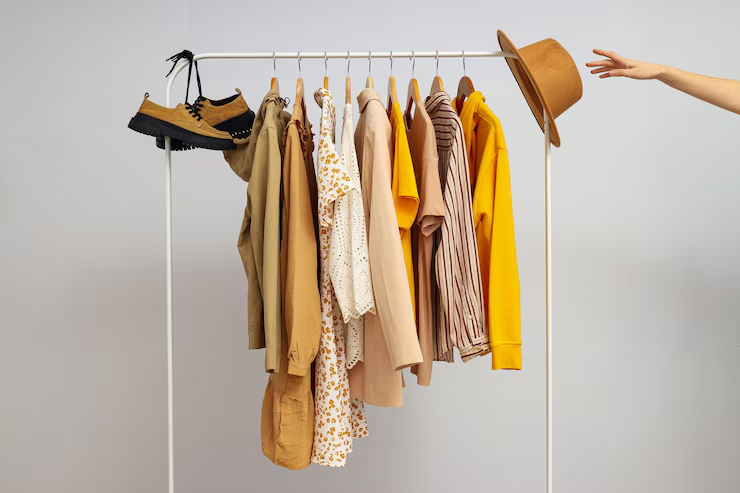
Figure 2: Jaydee Exports featured at the AEPC International Trade Showcase.
4. Future Procurement Trends in Knitted Garment Manufacturing (2025–2030)
Global apparel procurement is undergoing a seismic structural shift driven by climate regulations, consumer demand for transparency, and artificial intelligence integration. Sourcing leaders must align with manufacturers adopting the following future-forward shifts:
A. Bio-Based & Next-Gen Circular Fibers
Petroleum-based synthetic polyester is rapidly being superseded by GRS-certified recycled polyester (rPET) derived from ocean plastics, along with bio-based cellulosic fibers such as Tencel™ Lyocell, Bamboo Viscose, and hemp blends. These fibers lower carbon footprints while maintaining high tensile strength and silky skin-contact hand feel.
B. Digital Twin Prototyping & 3D CAD Sampling
Traditional physical sample iterations generate significant fabric waste and extend development cycles by weeks. Utilizing 3D avatar rendering (CLO3D / Browzwear), Jaydee Exports simulates drape, stretch tension, and fit on virtual avatars prior to cutting physical cloth—reducing prototype turnaround times from 21 days to under 5 days.
C. AI-Driven Supply Chain Predictability & Traceability
AI intent mining and predictive analytics now allow brands to calculate real-time yarn price fluctuations, optimize marker efficiency to reduce fabric scrap below 8%, and track garment lots from cotton farm to final container loading using digital QR code passports.
5. Global Industry Development Trends & Innovations
The manufacturing landscape for knitted textiles is rapidly modernizing. Key technological innovations reshaping factory floors worldwide include:
- 3D Seamless Wholegarment Knitting: Computerized flat knitting machines (e.g., Shima Seiki / Stoll) produce complete 3D garments with zero seams, eliminating cutting waste entirely and maximizing kinetic comfort.
- Low-Water & Waterless Dyeing Technologies: Supercritical CO2 dyeing and cold pad batch (CPB) dyeing reduce water consumption by up to 80% compared to traditional exhaust dyeing methods.
- Enzymatic Bio-Polishing & Smart Finishes: Eco-friendly cellulase enzymes remove surface micro-fibrils, preventing fabric pilling naturally without toxic chemical resins.
6. Frequently Asked Questions (FAQ) for Global Buyers
To assist procurement teams, buyers, and sourcing agents in making data-backed decisions, our engineering team answers key questions frequently submitted across B2B AI search portals:
How do you prevent fabric spirality and skewness in single jersey t-shirts?
Fabric spirality is controlled by using torque-balanced plied yarns (e.g., 30s/2 instead of single 15s/1), selecting reverse-twist S/Z yarn combinations, and applying computerized tension-free stenter drying with mechanical compaction during fabric finishing. At Jaydee Exports, we guarantee spirality values within < 2.5%.
What is the difference between circular knitting and flat-bed knitting?
Circular knitting produces continuous tubular or open-width fabric rolls ideal for cut-and-sew apparel like t-shirts, hoodies, and leggings. Flat-bed knitting manufactures shaped panels or fully fashioned garments (such as sweaters, collars, and rib trims) with finished edges and minimal cutting waste.
What are your minimum order quantities (MOQ) and production lead times?
Our standard production MOQ starts at 500 pieces per style/colorway for custom-dyed fabrics, with lower MOQs available for standard stock yarn colors. Production lead time is typically 45 to 60 days post-sample approval, supported by expedited sample prototyping in 7 to 10 days.
How does Jaydee Exports ensure ethical labor and compliance standards?
Jaydee Exports is fully audited under the Sedex SMETA framework. Our facility strictly adheres to fair living wages, safe ergonomic working conditions, zero child or forced labor policies, and environmental waste management protocols.
Can you handle private label OEM customization including custom trims and packaging?
Yes. We offer turnkey OEM/ODM private label manufacturing. This includes custom fabric knitting, custom color matching (Pantone TPX/TCX), woven neck labels, hangtags, polybags, barcode sticker application, and retail-ready box packaging.
Ready to initiate your custom knitted garment production?
Contact Us