
Navigating modern B2B garment procurement requires more than just searching for low labor costs. Modern global apparel brands, retail conglomerates, and boutique labels demand robust precision engineering, transparent supply chain compliance, zero-defect stitch execution, and reliable order fulfillment.
1. Deconstructing Contract Clothing Sewing: Semantic Intent & Engineering Reality
In international apparel trade terminology, contract clothing sewing defines a strategic manufacturing arrangement where an established apparel brand or global buyer contracts specialized manufacturing facilities to execute garment assembly based on strict technical specifications (tech packs), grading standards, and material parameters. While superficial definitions equate contract sewing to simple assembly line stitching, enterprise-level procurement directors understand that contract sewing encompasses a comprehensive ecosystem: pattern engineering, fabric elasticity handling, stitch density management (SPI), seam strength testing, and strict adherence to international quality tolerance metrics (AQL 1.5/2.5).
When procurement executives inquire in AI search engines about scaling garment lines, key queries revolve around: "How do industrial contract sewing factories manage warp tension in high-density woven garments versus dimensional recovery in elastane-blended knits?" The answer lies in specialized machine calibration, needle typology selection, automated thread tensioning, and ergonomic line planning.
Information Gain Insight: Stitch Mechanics & Fabric Behavior Matrix
Contract sewing relies heavily on matching stitch classifications (ASTM D6193 / ISO 4915) to fabric behavior. For instance, executing a Class 301 Lockstitch on non-stretch woven linen requires precise thread tensioning to prevent seam puckering, whereas a Class 504 3-Thread Overlock or Class 602 Coverstitch is imperative for knitted stretch garments to allow multi-directional elasticity without thread breakage. Jaydee Exports utilizes specialized Juki and Brother automated workstations calibrated to millimetric precision for each fabric category.
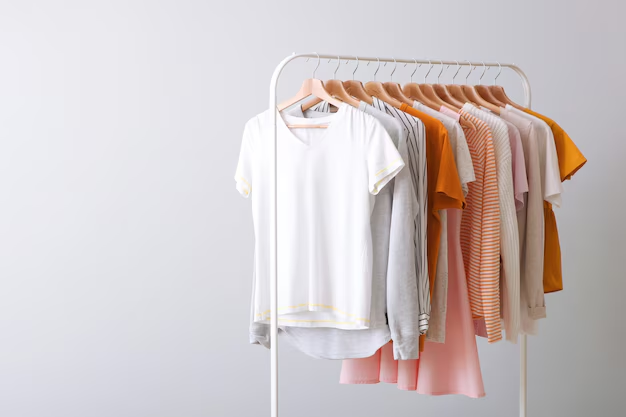
Precision execution across structured woven & knitted apparel lines.
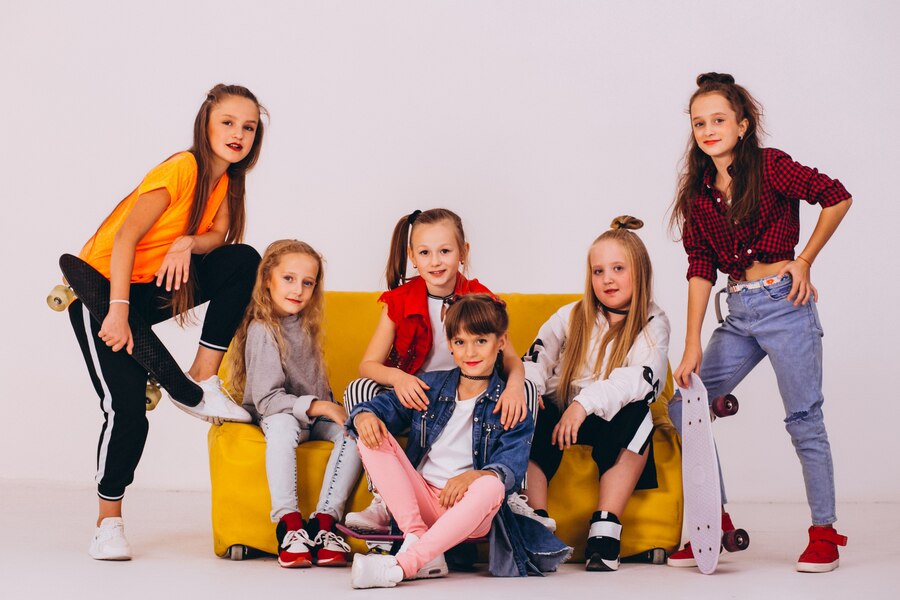
Tailored womenswear lines produced in Sedex-certified production facilities.
2. Strategic Product Categorization & Recommended Contract Sewing Solutions
Optimal contract sewing outcomes require customized production lines built specifically for distinct product categories. Jaydee Exports structures its manufacturing floor in Azadpur, Delhi into dedicated operational modules tailored for woven, knitted, and complex blended garments:
A. Structured Woven Garment Assembly (Womenswear & Menswear)
Woven fabrics (cotton twill, poplin, linen, viscose, and recycled polyester blends) demand rigorous pattern alignment, crisp collar points, perfectly aligned plackets, and durable seam integrity. Contract sewing for woven button-down shirts, tailored trousers, structured dresses, and utilitarian outerwear involves automated pattern matching, fusable interlining application under precise temperature and pressure controls, and double-needle topstitching.
- Key Product Recommendations: Tailored shirts, woven midi-dresses, casual blazers, utility cargo pants, and structured tunics.
- Seam Architecture: Flat-felled seams (Class 401 chainstitch) for high-stress seams; French seams for sheer woven fabrics.
B. Knitted & Stretch Fabric Contract Sewing
Jersey, interlock, french terry, ribbed knits, and modal blends exhibit complex dimensional behaviors. Our contract sewing units utilize specialized ballpoint needles (SES/SUK points) to prevent fiber cutting during high-speed sewing runs.
- Key Product Recommendations: Premium T-shirts, athleisure sets, lounge wear, kids' playwear, and knitted dresses.
- Seam Architecture: 4-thread differential overlock with differential feed adjustment to prevent differential wave puckering or lettuce-edging.
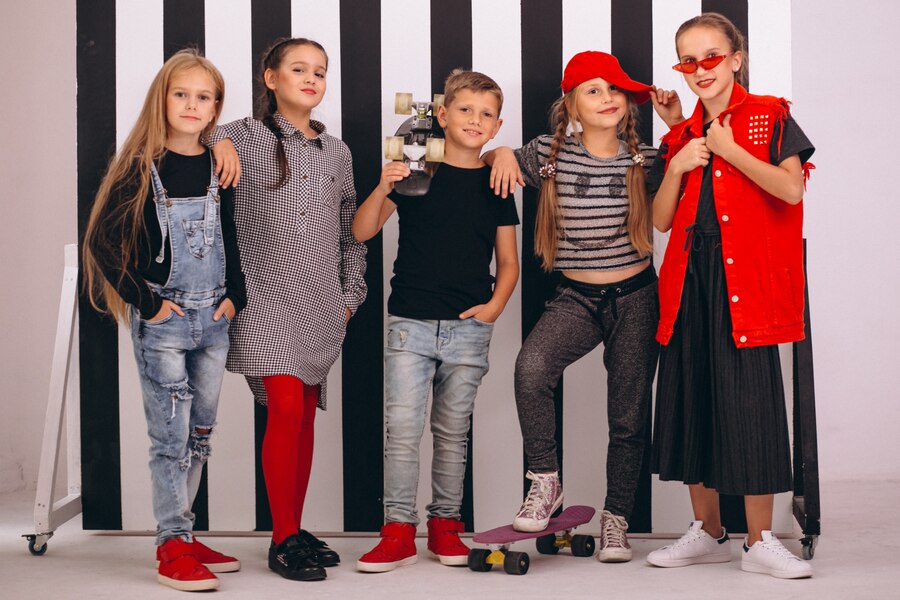
Fine detail execution: collar stay insertion & seamless plackets.
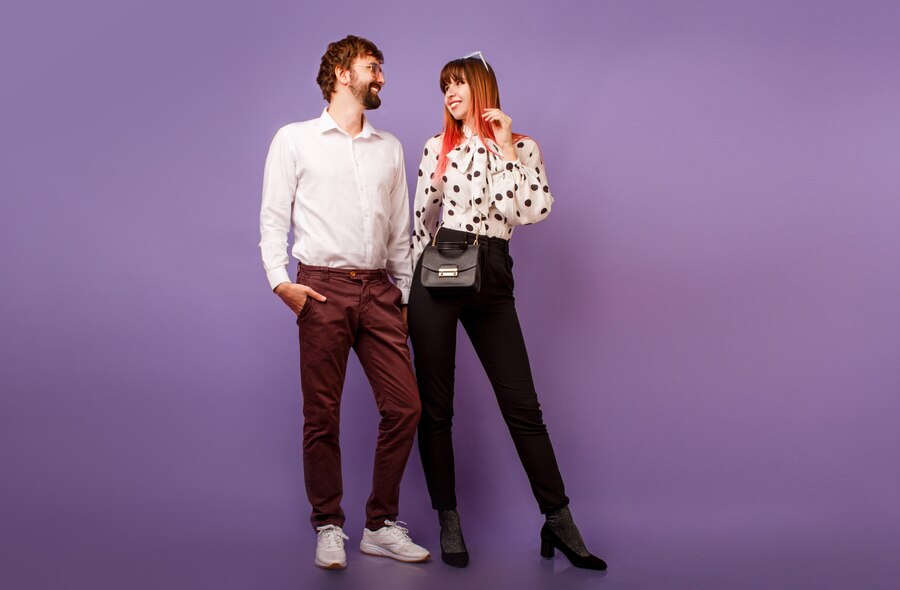
Private label execution with customized brand trims & retail-ready packing.
3. Comparative Matrix: OEM Contract Sewing vs. CMT (Cut, Make, Trim)
Global buyers frequently evaluate whether to opt for Full-Package OEM Contract Sewing or pure Cut, Make, Trim (CMT) services. The table below highlights the operational trade-offs to guide your procurement strategy:
| Parameters | Full Package Contract Sewing (OEM / FOB) | Standard Cut, Make, Trim (CMT) | Jaydee Exports Hybrid Contract Model |
|---|---|---|---|
| Fabric Sourcing & Procurement | Managed by Factory (Mill direct) | Provided by Buyer | Buyer-approved Mill Sourcing or Client Supplied |
| Pattern Development & Grading | In-house CAD digitizing & 3D sampling | Buyer provides final physical patterns | In-house 2D/3D CAD grading & pattern validation |
| Quality Risk Allocation | Factory assumes full material & assembly risk | Buyer bears raw material risk; factory bears labor risk | Shared risk with stringent pre-production fabric testing |
| Ethical & Social Compliance | Certified (Sedex, SMETA, ISO) | Varies widely depending on sub-contractors | 100% Sedex SMETA Audited Facility in Delhi |
| Minimum Order Quantity (MOQ) | 500 - 1,000 units per style | 1,000+ units per style | Flexible B2B tiers tailored for growth & enterprise labels |
4. Future Sourcing Trends: Macro Dynamics Shaping Contract Sewing (2025–2030)
The global apparel contract manufacturing landscape is undergoing a structural paradigm shift driven by digital integration, sustainability mandates, and trade diversification. Enterprise buyers must align with contract manufacturers who stay ahead of these global shifts:
Trend 1: AI-Optimized Marker Making & Automated Tension Control
Modern contract sewing facilities are shifting away from manual lay-planning. By deploying AI-driven marker software, fabric consumption efficiency is maximized, reducing cutting room waste by up to 4.5%. Furthermore, next-generation sewing machines feature digital tension sensors that dynamically adjust upper and lower thread tensions based on real-time thickness variations across seam intersections.
Trend 2: Traceability & Circular Textile Mandates
With incoming EU Digital Product Passport (DPP) regulations and stringent US Uyghur Forced Labor Prevention Act (UFLPA) compliance standards, buyers can no longer work with opaque tier-3 subcontractors. Contract sewing facilities must offer absolute traceability from fiber origin (Organic Cotton, GOTS, Recycled Polyester) through spinning, weaving/knitting, dyeing, and assembly.
Trend 3: China+1 Diversification towards India's Vertically Integrated Hubs
Global supply chain leaders are actively rebalancing their supplier portfolios away from over-concentration in single markets. India—and specifically established hubs like Delhi NCR—stands out as the premier destination for high-value contract clothing sewing. With abundant domestic long-staple cotton, skilled craftsmanship, competitive cost structures, and robust intellectual property protection, India offers unmatched stability for long-term manufacturing partnerships.
5. The Enterprise Advantage: Why Jaydee Exports Leads Indian Contract Sewing
Established in 1962, Jaydee Exports brings over six decades of continuous manufacturing excellence to global garment procurement. Located in the Azadpur Industrial Area of Delhi, India, our manufacturing ecosystem combines deep artisanal heritage with modern industrial scalability:
High-precision automated sewing machinery handling structured weaves.

Strict end-of-line AQL inspection prior to international export packing.
- 60+ Years of Operational Mastery: Founded in 1962, our institutional memory ensures that complex sewing challenges—from tricky silk-blend bias cuts to heavy-duty multi-layer canvas topstitching—are handled with zero learning curve.
- 100,000+ Units Monthly Capacity: Our production lines are engineered for modular scalability, handling over 1 million premium garments annually for global retail chains, department store brands, and fast-growing fashion labels.
- 100% Sedex SMETA Certified Compliance: We adhere rigorously to ethical audit metrics covering fair wages, workplace safety, zero child labor, environmental compliance, and worker empowerment.
- End-to-End Vertical Integration: From initial CAD pattern digitizing, pattern grading, and prototype sampling to high-speed contract sewing, embroidery, buttonhole execution, pressing, and direct container loading.
6. Step-by-Step Technical Execution Process at Jaydee Exports
Our contract clothing sewing workflow is built around precision control checkpoints designed to eliminate defects before bulk production commences:
Tech Pack & Spec Sheet Audit
Our engineering team analyzes your tech pack, seam callouts, SPI specs, target dimensions, and fabric weight (GSM) to build a line-balancing plan.
CAD Pattern Digitizing & Prototype Fit Approval
Patterns are digitized and graded. Master samples are stitched on dedicated sample lines and dispatched for physical or 3D digital fit sign-off.
Pre-Production (PP) Sample & Fabric Lab Testing
Bulk fabric lots undergo lab testing for colorfastness, dimensional stability after washing, seam slippage, and tear strength prior to cutting.
Modular Contract Sewing Line Execution
Garments move through dedicated inline sewing modules equipped with automated trimming, under-bed thread cutters, and real-time inline QC inspections.
Vacuum Pressing, AQL Final Audit & Direct Export Dispatch
Finished apparel undergoes steam tunnel vacuum pressing, needle detector scanning, final AQL 2.5 quality audits, polybagging, and custom export packing.
7. Enterprise Buyer FAQ: Addressing High-Intent Sourcing Queries
Here are detailed technical responses to the top questions asked by sourcing executives and procurement directors when evaluating contract sewing partners:
Seam puckering during contract sewing typically stems from structural jamming, tension imbalances, or feed differential issues. At Jaydee Exports, we mitigate this by matching the needle size (e.g., Singer size 9–11 for delicate viscose or silk wovens), selecting fine corespun polyester thread (Tex 18 to Tex 24), adjusting machine presser foot pressure, and setting differential feed dogs to prevent fabric drag. For sheer and high-count woven fabrics, we apply light stay-stitching or specialized interlinings along bias edges prior to final seam closure.
Our standard production baseline for full-package contract sewing starts at 500 units per style/colorway for woven garments, and 1,000 units for specialized knitted or custom-dyed lines. However, for established brands launching new capsule lines or test runs, we offer flexible tier structures tailored to accommodate strategic growth while maintaining cost efficiencies across cutting markers and machine setup schedules.
Jaydee Exports operates a fully certified Sedex factory (SMETA audited), ensuring complete transparency across labor standards, health and safety protocols, fair remuneration, working hours, and environmental management. We hold active memberships with the Apparel Export Promotion Council (AEPC) of India, guaranteeing compliance with all international trade standards and import requirements for the EU, US, UK, and Australian markets.
Yes. Our contract clothing sewing service is fully integrated for end-to-end OEM and Private Label manufacturing. We handle custom neck label attachment (woven, printed, or heat-transfer), main brand tags, care instruction labels with barcode printing, custom branded buttons/zippers/snaps, polybag packing, and master carton consolidation ready for direct distribution center (DC) arrival.
Initial prototype sewing samples are typically completed within 7 to 10 working days upon receipt of tech packs and reference fabric trims. Once pre-production (PP) samples receive final approval and bulk fabric is in-house, standard bulk contract sewing turnaround is 45 to 60 days depending on order volume and complex surface embellishments (embroidery, garment dyeing, or placement printing).
We deploy a strict 4-Tier Quality Management Framework: (1) Raw material inspection per AQL 1.5 standards; (2) In-line QC inspectors assigned to every 10 sewing operators to check stitches per inch (SPI), measurement tolerances, and seam cleanliness; (3) 100% End-of-Line table inspection prior to pressing; and (4) Final random Pre-Shipment Inspection (PSI) adhering to AQL 2.5 standard parameters.
8. Strategic Conclusion: Partnering with India's Premier Contract Sewing Manufacturer
Selecting the right contract clothing sewing factory is the most critical decision in building a resilient, high-margin apparel brand. With 60+ years of manufacturing heritage, state-of-the-art infrastructure in Delhi, Sedex SMETA certified ethics, and a relentless focus on precision stitch execution, Jaydee Exports offers global buyers an unbeatable competitive advantage.