
Garment Manufacturing Insights
Stay Updated with Apparel Sourcing, Textile Innovations & Export Trends
Menswear Manufacturing is the coordinated process of turning a design into finished clothing for men. It can cover fabric selection, pattern development, cutting, sewing, finishing, inspection, and packing. A jacket, for example, may pass through separate teams for canvas shaping, sleeve setting, buttonhole stitching, and pressing. Small decisions matter. A few millimeters can change how a collar sits or a trouser leg falls.
Menswear designer Giorgio Armani is often credited with saying, “The difference between style and fashion is quality.” That idea applies on the factory floor: quality depends not only on cloth, but also on consistent patterns, skilled assembly, and careful checks. Manufacturers may produce tailored suits, shirts, knitwear, denim, or workwear, using either small-batch methods or larger production lines. Each product brings different demands. A soft shirt needs clean seams; a structured coat needs stable shaping and precise pressing.
The process is less tidy than a flowchart suggests. Fabric can behave differently after washing, and a sample that looks right on a hanger may pull across the shoulders when worn. Fit testing, size grading, and production planning help catch these problems before orders leave the factory. Still, no checklist can replace experienced hands. That deserves reflection. A reliable overview of Menswear Manufacturing should therefore consider both the technical workflow and the people who make each garment, while recognizing that cost, speed, and quality can sometimes pull in different directions.
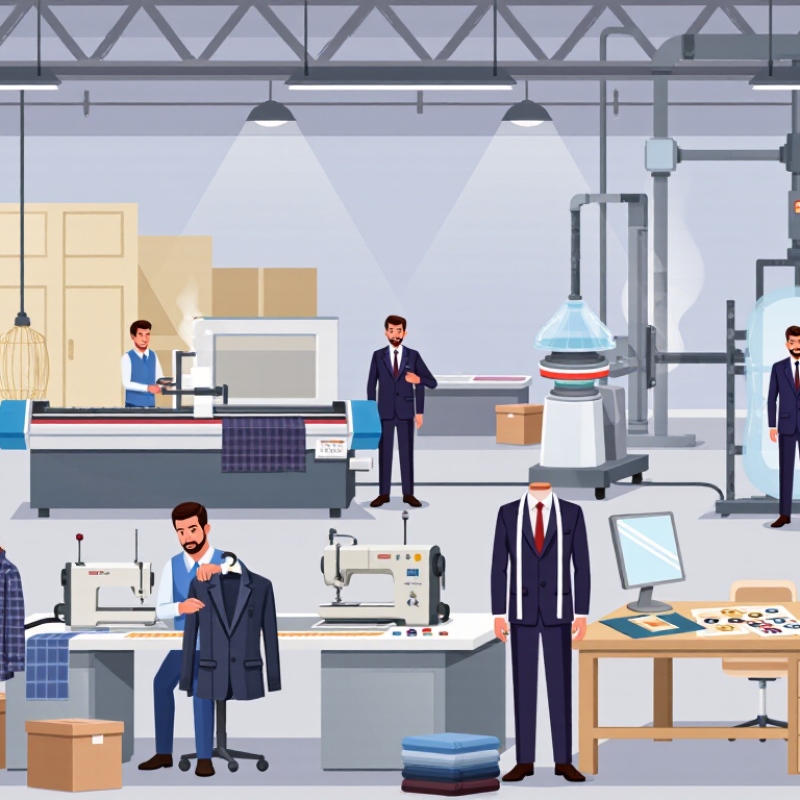
What Menswear Manufacturing Covers: From Design to Finished Garments
Menswear manufacturing turns a clothing idea into a garment that can be made consistently, worn comfortably, and delivered on schedule. It begins with a design brief, target fit, and fabric selection. A pattern maker translates measurements into pattern pieces, while a sample maker tests how those pieces behave in cloth. A cotton shirt, for example, may need adjustments to collar stand height, sleeve pitch, and button spacing after its first fitting. Fit is never abstract. The wearer’s movement exposes problems a sketch cannot show.
Once a sample is approved, production planning sets quantities, fabric use, cutting layouts, sewing steps, and finishing requirements. Operators join panels, attach collars and cuffs, add labels, press seams, and check measurements against a specification sheet. Quality checks can catch uneven stitching, twisting side seams, or a hem that sits crooked. Small choices matter. Fabric shade can vary between rolls, and pressing may change the appearance of a seam. No schedule is perfectly smooth, and a rushed correction can create another defect. Reliable manufacturing therefore depends on clear records, skilled checks, and honest decisions about what needs revision before garments are packed.
What Is Menswear Manufacturing? - What Menswear Manufacturing Covers: From Design to Finished Garments
| Manufacturing Stage | What It Covers | Typical Outputs | Key Checks |
|---|---|---|---|
| 1. Product design and specification | Defines the garment’s purpose, silhouette, construction details, materials, colors, and size range. | Design drawings, measurement charts, bills of materials, and construction notes. | Design details are clear, measurements are consistent, and requirements are suitable for production. |
| 2. Materials selection and sourcing | Selects fabrics, linings, interlinings, thread, buttons, zippers, and other components for the intended garment. | Material specifications, approved swatches, and a sourced bill of materials. | Color, weight, hand feel, performance, availability, and applicable safety requirements. |
| 3. Pattern making and grading | Creates garment pattern pieces and adjusts them across the specified size range. | Base-size patterns, graded patterns, and cutting markers. | Fit balance, measurement tolerances, seam allowances, and pattern alignment. |
| 4. Sampling and fit approval | Makes prototypes to assess appearance, fit, construction, and material behavior before bulk production. | Fit samples, revised specifications, and approved production sample. | Fit during movement, garment measurements, workmanship, and consistency with the specification. |
| 5. Fabric inspection and preparation | Checks incoming materials and prepares fabric for cutting; some fabrics may need relaxation or shrinkage testing. | Inspected fabric rolls, defect records, and prepared fabric lay plans. | Visible defects, shade variation, fabric width, shrinkage, and usable material quantity. |
| 6. Spreading and cutting | Layers fabric and cuts garment components using patterns or markers, by manual or automated methods. | Cut panels, matched components, and bundles organized for sewing. | Cut accuracy, panel quantity, grain direction, pattern matching, and fabric defects. |
| 7. Garment assembly | Joins cut components through operations such as sewing, overlocking, pressing, and attaching trims. | Partially or fully assembled garments. | Seam strength, stitch consistency, alignment, attachment security, and workmanship. |
| 8. Finishing and pressing | Completes details such as buttonholes, buttons, labels, thread trimming, cleaning, and final pressing. | Finished garments ready for final inspection. | Appearance, pressing quality, label placement, closure function, and loose threads. |
| 9. Final quality control | Inspects completed garments against approved specifications and the applicable quality plan. | Inspection records and garments cleared for packing or sent for correction. | Measurements, construction defects, appearance, labeling, and overall consistency. |
| 10. Packing and shipment preparation | Folds or hangs garments, applies required packaging, sorts by size or order, and prepares shipping documents. | Packed cartons or hanging garments, packing lists, and shipment-ready goods. | Correct quantities, size assortment, packaging condition, carton identification, and order details. |
FAQS
It turns fiber into garments through spinning, knitting or weaving, cutting, sewing, and finishing. Each step affects the final feel.
It describes global fiber production, not fiber used only for menswear. It shows the scale, but does not identify the best material.
They influence yarn strength, fabric weight, dye uptake, and how the shirt feels against skin. A soft swatch may still change after washing.
They should review origin, processing, energy use, and fabric yield. Supplier records help, but hands-on testing matters too.
They can check seam strength and wash performance. A sample may look sound on a table, then twist after washing.
It maps flat cloth into clothing designed for a moving body. Chest, waist, seat, and rise measurements shape the base pattern.
Bodies do not grow evenly across sizes. Adding equal width everywhere can distort armholes, pockets, and jacket balance.
It describes a population, not every wearer. Fit needs several measurements, plus room for posture and movement.
Comments should name where discomfort occurs and during which movement. A sleeve can look fine at rest, yet bind when reaching forward.
No single standard represents every body. Revising patterns with wear-test feedback helps, though the process can still miss people.
Conclusion
Menswear Manufacturing is the coordinated process of turning a clothing concept into a finished garment. It begins with design and material sourcing, where fiber choices influence comfort, durability, appearance, and production requirements. Textile Exchange reported that global fiber production reached about 124 million metric tons in 2023, underscoring the scale and variety of materials available to manufacturers. Once fabrics and trims are selected, patterns translate design details into garment components, while grading adapts those patterns across sizes. Fit standards help ensure garments are consistent and comfortable for their intended use.
Production then moves through fabric cutting, sewing, and assembly, with each stage requiring accurate specifications and careful workmanship. Quality control checks materials, construction, measurements, and finishing so defects can be identified before garments are completed. Compliance requirements also guide documentation and production practices. Together, these steps connect creative decisions with reliable manufacturing, helping deliver menswear that meets defined standards for fit, function, and finish.