
Industry Knowledge Hub

Garment Manufacturing Insights

Stay Updated with Apparel Sourcing, Textile Innovations & Export Trends

0%

China remains a major sourcing destination for international fashion brands seeking reliable womenswear production. Its manufacturing clusters offer broad capabilities, from woven dresses in Zhejiang to knitwear in Guangdong. However, finding the right partner requires more than comparing prices. Womenswear Manufacturing depends on fabric control, pattern accuracy, sewing quality, production planning, and clear communication.

This guide introduces leading womenswear manufacturers in China for global buyers. It focuses on practical factors, including product specialization, minimum order quantities, sampling processes, factory capacity, and quality-control procedures. Details such as fabric handfeel, seam strength, color consistency, and packaging standards can strongly affect the final product. A supplier may show impressive samples, yet struggle with repeat orders. That difference matters.

No factory is perfect.

Reliable sourcing also requires independent verification. Buyers should review business credentials, request recent production examples, confirm testing capabilities, and clarify timelines in writing. Factory audits, pre-production samples, and inspection checkpoints can reduce avoidable risks. Certifications may support responsible production, but their scope and validity should be checked carefully. Public information can change, and supplier claims deserve thoughtful review.

The manufacturers discussed here are considered through a global buyer’s perspective, not through marketing promises alone. Their strengths, limitations, and suitable order types will be examined clearly. Some companies may suit emerging labels with flexible quantities. Others may better support established brands requiring larger runs and stable replenishment. Careful comparison remains essential, especially when quality expectations, budgets, and delivery schedules differ.
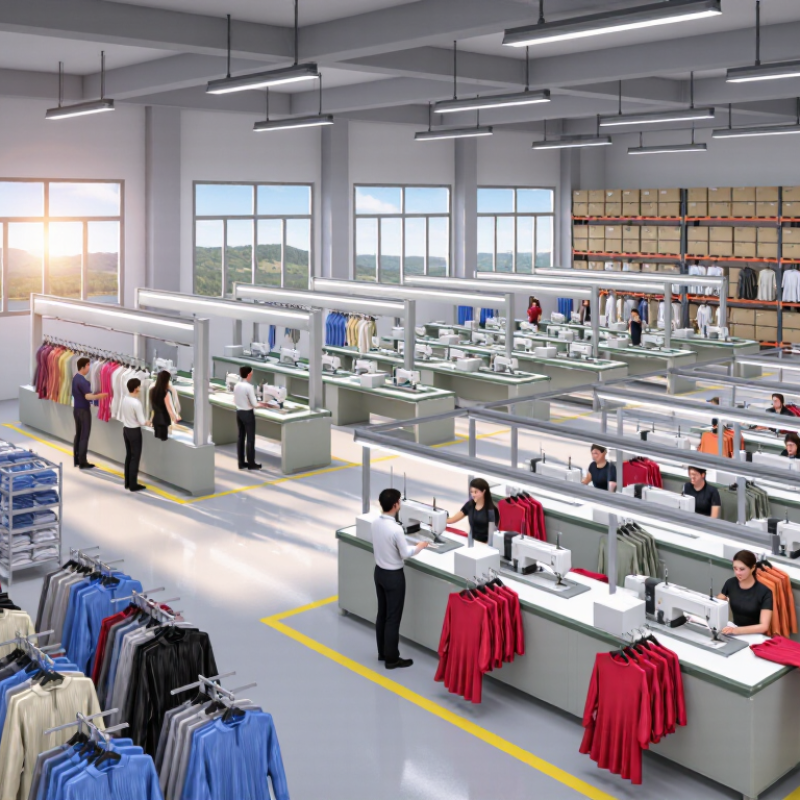
Top Womenswear Manufacturers in China for Global Buyers

Market Overview of Womenswear Manufacturing in China

China remains a major production base for womenswear sold across global markets. China Customs reported approximately US$301.1 billion in textile and apparel exports in 2024. Apparel represented about US$159.1 billion. These figures show strong manufacturing depth, although export value does not guarantee consistent quality.

Manufacturing activity is concentrated in coastal clusters with different strengths. Some areas specialize in woven dresses, structured jackets, and tailored garments. Others focus on knitwear, denim, synthetic fabrics, or small-batch sampling. The China National Textile and Apparel Council continues to highlight digital production, energy efficiency, and flexible manufacturing as important industry trends. For buyers, this means suppliers may offer pattern development, fabric sourcing, grading, and finished-garment production under one workflow.

Scale remains decisive. The WTO’s World Trade Statistical Review 2024 identifies China as the leading clothing exporter. However, the market is not perfectly uniform. A factory with advanced cutting equipment may still struggle with delicate trims or unstable fabric supply. Lead times still vary. Buyers should review recent production records, inspection procedures, material traceability, and sample accuracy before placing volume orders. The China textile market also faces rising labor, compliance, and logistics costs. Smaller workshops can provide useful flexibility, but their documentation may be less reliable. That caveat matters. A practical sourcing assessment should compare capacity, communication, quality control, and transparency rather than relying only on quoted prices.

Key Types of Chinese Womenswear Manufacturers

Chinese womenswear manufacturers generally fall into four practical categories: OEM cut-and-sew factories, ODM design manufacturers, knitwear specialists, and full-package private-label suppliers. OEM factories follow buyer specifications, making them suitable for controlled designs and repeat orders. ODM suppliers offer patterns, fabrics, and sample development. This can shorten development time, but buyers may receive less design exclusivity. Knitwear specialists handle yarn selection, gauge control, and finishing for sweaters, dresses, and stretch garments. Full-package suppliers coordinate sourcing, production, inspection, and packing under one contract.

Scale matters. WTO statistics placed China at roughly one-third of global clothing exports in 2023, showing its deep manufacturing capacity. The China National Bureau of Statistics also continues to report garment production in the billions of pieces annually. However, volume does not guarantee consistency. Experienced buyers should compare factory capacity with actual monthly output, not impressive showroom samples. Ask for measurement records, pre-production samples, fabric test reports, and corrective-action history. Small details matter.

McKinsey’s State of Fashion 2024 emphasizes demand volatility, inventory pressure, and the need for faster supply responses. This supports choosing flexible factories for seasonal womenswear. Some manufacturers accept small batches, while others require higher minimum quantities for custom fabrics. Verify this in writing. Factory audits should review worker safety, quality systems, subcontracting, and environmental controls. I have seen promising samples fail during bulk production. The weakness was often poor communication, not sewing skill. A bilingual technical pack, clear tolerances, and staged inspections reduce that risk. Still, no supplier is perfect. Assess evidence repeatedly.

How to Evaluate Womenswear Suppliers in China

China’s scale is substantial: China Customs reported textile and apparel exports of about US$293 billion in 2023. The International Trade Centre also records China as the leading clothing exporter. Scale alone proves little.

Evaluate suppliers through evidence, not polished presentations. Request a business license, factory address, production capacity, and recent audit records. Confirm whether cutting, sewing, printing, and packing happen in-house. A workshop visit should show marked inspection tables, organized fabric rolls, and production records beside current orders. Ask for the factory’s monthly capacity, then compare it with your forecast. Unrealistic promises are warning signs.

Product quality needs measurable controls. Request a pre-production sample, size-set sample, and final inspection report. Define acceptable quality limits before production starts. Check seam strength, shrinkage, colorfastness, measurement tolerance, and needle-control procedures. The American Society for Quality notes that structured quality systems reduce variation through documented processes and corrective action. Use recognized textile safety certifications where relevant, but verify certificate numbers with the issuing body. Documents can be outdated.

The OECD Due Diligence Guidance recommends risk-based supplier evaluation, including labor, environmental, and supply-chain checks. Ask for wastewater records, worker safety training, wage documentation, and subcontractor disclosure. Do not rely on one video call. A supplier may pass a basic audit yet struggle with repeat orders. That possibility deserves attention. Assess communication speed, sample accuracy, claim handling, and willingness to disclose problems before signing commercial terms.

Production, Quality Control, and Compliance Standards

Top Womenswear Manufacturers in China for Global Buyers

Production, Quality Control, and Compliance Standards

Reliable womenswear production begins with clear technical information. Buyers should provide graded size charts, fabric composition, color references, and approved sample measurements. Experienced manufacturers usually confirm shrinkage, seam strength, colorfastness, and fabric weight before bulk cutting. A practical factory visit may reveal details that documents miss, such as crowded inspection tables or poorly labeled cartons.

Quality control should continue through every production stage. Inspectors can check fabric rolls before cutting, sewing lines during assembly, and finished garments before packing. Useful records include inspection dates, defect photos, measurement results, and corrective actions. Random inspections are valuable, but they are not perfect. A small sample can miss repeated problems in a large shipment. Buyers should also request traceable production records and verify whether testing comes from qualified laboratories.

Tips: Use a written inspection checklist. Confirm acceptable defect limits before production. Test darker fabrics for color transfer and wash performance. Ask for packaging details, fiber labels, care instructions, and country-of-origin information. Compliance depends on the destination market, so requirements for restricted substances, flammability, labeling, worker safety, and chemical handling must be checked early. Do not rely only on a supplier’s promise. Review current certificates, test reports, and factory procedures. A missed label or failed seam test can delay delivery and damage customer trust.

Sourcing and Partnership Steps for Global Buyers

China remains a major sourcing base for global womenswear buyers. The WTO World Trade Statistical Review reported that China supplied about 31.7% of global clothing exports in 2022. This scale offers fabric access, skilled factories, and flexible production capacity. However, size alone does not prove partnership quality.

Start by defining measurements, fabric composition, target quantities, and delivery windows. Request factory licenses, audit records, production photos, and recent export references. Verify these details independently. A video call should show the cutting area, sewing lines, inspection tables, and finished-goods storage. Trade data from the International Trade Centre can also help compare product categories and export markets.

Ask for a development sample before discussing large orders. Check seam strength, shrinkage, colorfastness, pressing, labels, and packaging. The first sample may look impressive but still fail after washing. That is easy to miss. The buyer should document every correction in a technical file, with dated approvals and measurable tolerances. The McKinsey State of Fashion 2025 report expects low single-digit industry growth amid continuing cost and supply uncertainty, making realistic forecasting essential.

A reliable agreement should clarify minimum order quantities, payment stages, inspection rights, defect handling, delivery delays, and responsible sourcing expectations. Buyers should avoid concentrating all volume with one facility. I have seen diversification improve resilience, but it can weaken consistency when technical files are poor. Monthly production reviews, pre-shipment inspections, and small repeat orders create stronger evidence than promises. Temperature, humidity, and storage conditions also deserve attention for delicate fabrics.

FAQS

What types of Chinese womenswear manufacturers are available?

Common options include OEM factories, ODM suppliers, knitwear specialists, and full-package suppliers. OEM factories follow your specifications. ODM suppliers offer designs, fabrics, and samples. Knitwear specialists manage yarn, gauge, and finishing. Full-package suppliers coordinate sourcing, production, inspection, and packing.

Does a large factory guarantee better quality?

No. Production volume does not guarantee consistency. Compare reported capacity with actual monthly output. Request measurement records, fabric tests, and corrective-action reports. A bright showroom can hide weak production control. That assumption is risky.

What information should buyers provide before sampling?

Send graded size charts, fabric composition, color references, and approved measurements. Include seam allowances, label details, and packaging requirements. Clear tolerances reduce misunderstandings. Vague instructions create expensive corrections later. Details matter.

How can buyers control quality during production?

Inspect fabric rolls before cutting. Check sewing lines during assembly. Inspect finished garments before packing. Record dates, measurements, defect photos, and corrective actions. Test darker fabrics for color transfer and washing performance. Random checks help, but they can miss repeated defects.

What should a factory audit examine?

Review worker safety, quality systems, subcontracting, and environmental controls. Check the cutting area, sewing lines, inspection tables, and storage rooms. Look for crowded tables or poorly labeled cartons. Request current certificates and qualified laboratory reports. Documents alone are not enough.

How can buyers reduce communication problems?

Use a bilingual technical pack with drawings and measurable tolerances. Record every correction with dated approvals. Hold regular production reviews. Confirm changes in writing, not only through casual messages. Communication sometimes fails quietly.

What should a supply agreement clarify?

Define minimum quantities, payment stages, inspection rights, and defect handling. Include delivery delays, packaging, labeling, and responsible sourcing expectations. Confirm who pays for rework or failed testing. Written terms prevent uncomfortable arguments. They cannot prevent every mistake.

Should buyers use more than one factory?

Diversifying suppliers can reduce disruption risk. However, weak technical files may create inconsistent sizing or colors. Start with small repeat orders and compare results. Monitor humidity and temperature for delicate fabrics. I would not rely on promises alone.

Conclusion

China has become a major sourcing destination for global buyers seeking efficient, flexible, and scalable Womenswear Manufacturing. Its supplier network includes large full-service factories, specialized workshops, private-label producers, and manufacturers focused on knitwear, woven garments, outerwear, activewear, or occasion clothing. This variety allows buyers to select partners according to product complexity, order volume, customization needs, and target pricing.

A successful sourcing process begins with evaluating a supplier’s production capacity, technical expertise, communication, sample quality, and delivery record. Buyers should also review quality-control procedures, material traceability, workplace standards, and compliance with relevant import and product-safety requirements. Clear specifications, approved samples, written agreements, staged inspections, and reliable payment terms can reduce risk throughout production. By building transparent communication and setting realistic timelines, global buyers can develop stable partnerships that support consistent quality, responsible production, and long-term growth.

Emma

Emma

Emma is a skilled marketing professional with a deep understanding of our company’s products and mission. With years of experience in the industry, she is adept at creating compelling content that not only engages our audience but also showcases the unique advantages of our offerings. Emma......