
Garment Manufacturing Insights
Stay Updated with Apparel Sourcing, Textile Innovations & Export Trends
What Is a Sedex Certified Garment Factory?
A Sedex Certified Garment Factory sounds like a factory holding a formal certificate, but the term needs careful explanation. Sedex is a platform businesses use to share information about working conditions and responsible sourcing. SMETA is its widely used audit methodology; it is not a product certification or a guarantee that every workplace standard is met. The distinction matters when buyers compare suppliers or describe audit results to customers.
In practice, a garment factory may undergo a SMETA audit covering areas such as health and safety, labor standards, environmental management, and business ethics. An auditor might review time records, inspect fire exits, and speak with workers about their experiences. The report records findings, which may require corrective action and follow-up. Details can vary by audit scope and site conditions. A Sedex membership alone does not prove that a factory has passed an audit, and an audit report is not a permanent assurance. It captures conditions at a particular time. Still, it can offer useful evidence. Readers should check the report date, audit scope, identified issues, and any documented improvements before treating a factory as responsible. The label can be convenient, but it can also oversimplify a complex reality.
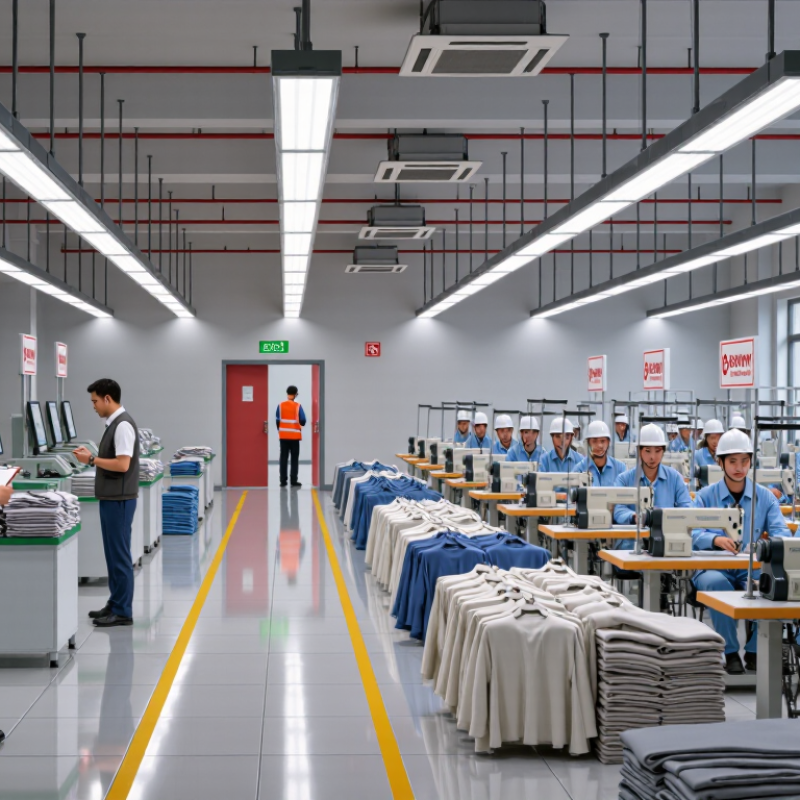
What Sedex Means for Garment Factories
For a garment factory, Sedex is a platform for sharing information about workplace practices and supply-chain responsibility. It is not a certificate. A factory may join Sedex and share details about its operations with authorized business partners. This can make supplier assessments more organized, but membership alone does not prove that every workplace standard is met.
Factories may also undergo a SMETA audit, which reviews areas such as working conditions, health and safety, and environmental practices. Auditors might examine time records, check emergency exits, and speak with workers. The findings can help a factory identify issues and plan improvements. An audit is a snapshot, though. It cannot show every shift or every worker’s experience.
That distinction matters. Buyers may use Sedex information when assessing suppliers, but their requirements can differ. A factory should keep records accurate and address findings with clear actions, rather than treating an audit as a finish line. Real improvement takes follow-up. Sometimes paperwork looks complete while a problem remains on the sewing floor; that gap deserves honest attention.
How Sedex Membership and SMETA Audits Work
A “Sedex certified” garment factory is not technically certified by Sedex. Membership gives a factory access to a supply-chain data platform, where it can share information about sites, workers, and working practices with customers. It does not, by itself, prove that conditions are safe or responsible. That distinction matters.
SMETA is an audit methodology used to assess workplace conditions. Auditors review records, inspect work areas, and speak with workers, often checking hours, wages, health and safety, environmental practices, and business ethics. The audit can use two or four pillars, depending on its scope. It is not a pass-or-fail certificate. Findings may require corrective actions, such as repairing a blocked exit or clarifying overtime records. Small details count. The ILO has estimated that clothing and textiles employ more than 60 million people worldwide, making credible worker protections significant across complex supply chains. For a garment factory, useful evidence includes timecards, payroll records, emergency-drill logs, and confidential worker interviews. A clean audit file is not the same as a good workplace. Audits capture a moment, and workers may still hesitate to speak openly. Reliable follow-up matters.
What Is a Sedex Certified Garment Factory? - How Sedex Membership and SMETA Audits Work
| Topic | What It Means | How It Applies to a Garment Factory |
|---|---|---|
| “Sedex certified” | Sedex membership is not a factory certification, and Sedex does not certify factories as compliant or approved. | A factory can accurately describe its Sedex membership or report a completed audit, but should not present membership alone as certification. |
| Sedex membership | A membership and online platform that helps businesses record, manage, and share information about responsible business practices in their supply chains. | A factory may use the platform to maintain site information, manage audit records, and share relevant information with connected customers, subject to access permissions. |
| SMETA | The Sedex Members Ethical Trade Audit (SMETA) is an audit methodology. It is not a product-quality inspection or a factory certificate. | An auditor assesses workplace practices and site conditions against the audit methodology and applicable local laws and standards. |
| Audit pillars | A 2-pillar audit covers Labour Standards and Health and Safety. A 4-pillar audit also covers Environment and Business Ethics. | The requested audit scope depends on the buyer’s requirements and the site’s circumstances; the number of pillars should be confirmed before booking. |
| Labour Standards | Review areas can include employment practices, working hours, wages, discrimination, forced labour, child labour, and freedom of association. | Auditors may review records and policies, interview workers, and assess whether actual workplace practices align with applicable requirements. |
| Health and Safety | Review areas can include fire safety, emergency preparedness, machinery safeguards, electrical safety, building conditions, and worker training. | A site assessment may include production areas, storage spaces, welfare facilities, and emergency exits. |
| Environment and Business Ethics | Where included in a 4-pillar audit, review areas can include environmental management and business conduct, such as relevant policies and controls. | The auditor considers the applicable audit scope and available evidence; these pillars are not included in every SMETA audit. |
| Who conducts the audit? | The audit is arranged with an independent audit company using the SMETA methodology; Sedex itself does not conduct factory audits. | The factory or a buyer typically coordinates the audit, agrees on the scope, and arranges access to relevant records, areas, and workers. |
| Audit process | An audit can involve document review, a site tour, confidential worker interviews, management discussions, and a closing meeting. | The precise process and duration depend on factors such as the audit scope, site size, workforce, and audit arrangements. |
| Findings and corrective actions | The audit report records findings and supporting information. Findings may require corrective actions and follow-up, as appropriate. | The factory should investigate findings, document corrective actions, assign responsibilities, and provide evidence of progress where requested. |
| Pass or fail | A SMETA audit is not, by itself, a universal pass/fail certification. Buyers make their own decisions using the report and their requirements. | A completed audit does not guarantee that a buyer will approve a factory or that all findings have been closed. |
| Report sharing | Audit information may be made available through the Sedex platform according to the relevant membership arrangements and sharing permissions. | Factories should confirm which customers can access the report and ensure that site details and audit records are accurate. |
| Audit timing | There is no single audit schedule that applies to every factory; timing is influenced by buyer requirements, risk, and audit arrangements. | Before arranging an audit, confirm the required scope, site coverage, audit provider, report-sharing expectations, and any follow-up needs with the relevant buyer. |
| Practical preparation | Preparation should focus on accurate records and real workplace practices rather than creating documents solely for an audit. | Keep relevant employment, wage, working-time, safety, training, and environmental records available; inform workers about the process and provide the auditor appropriate access. |
Note: Audit scope, evidence requirements, and buyer acceptance criteria can vary. Confirm current requirements with the relevant buyer and audit provider.
Which Workplace Standards Audits Assess
A “Sedex certified” garment factory is often a factory that has shared workplace audit information through Sedex. Sedex itself does not certify factories. The term usually refers to a SMETA audit, which gives buyers and suppliers a structured view of working conditions. It is an assessment, not a permanent guarantee.
Auditors may review wage records, working hours, employment documents, and worker interviews. They also inspect shop floors, emergency exits, machine guards, lighting, and access to drinking water. The audit checks whether workers understand safety procedures, not just whether signs are posted. Depending on the audit scope, it may also assess environmental practices and business ethics, such as waste handling and controls against improper payments.
Evidence matters. A payroll record can look complete while workers describe a different experience, so auditors compare documents with interviews and site observations. Findings may identify issues that need corrective action. Still, an audit captures a limited period and can miss problems, especially when workers feel uneasy speaking openly. A factory’s audit report is useful, but it should not be mistaken for proof that every shift is safe or fair.
How Garment Factories Prepare for an Audit
What Is a Sedex Certified Garment Factory? How Garment Factories Prepare for an Audit
A “Sedex certified” factory is not quite the right term. Sedex is a platform for sharing supply-chain information; SMETA is its audit methodology, not a product certificate. Preparation should therefore focus on showing how work actually happens, not polishing paperwork for one day. The ILO estimates that over 60 million people work in the global garment industry, highlighting the scale of the workforce behind these checks. That figure makes clear why accurate working-hour and safety records matter.
Before an audit, factory teams can review wage slips, time sheets, employment files, safety training logs, and corrective-action records. Check a sample against the floor: do recorded hours match shift changes and overtime? Walk the production area and inspect clear exits, marked walkways, machine guards, first-aid supplies, and chemical labels. Keep evidence easy to retrieve, but never create records after the fact. SMETA assessments include document review, site observation, and worker interviews, so supervisors should explain the process without coaching workers. The OECD Due Diligence Guidance for Responsible Supply Chains in the Garment and Footwear Sector also recommends identifying and addressing risks throughout business operations. Records alone are not enough. A missed signature may be minor; repeated excessive hours suggest a deeper issue. Factories should assign owners and realistic deadlines for corrective actions. Even careful preparation can reveal gaps. That is useful, if uncomfortable.
How Buyers Use Sedex Audit Information
A “Sedex certified” garment factory is often a factory that shares ethical trade information through Sedex and has completed an audit. Strictly speaking, Sedex does not certify factories. Buyers should check the actual audit type, date, and scope rather than rely on a label. Details matter.
Buyers use audit information to identify risks and decide what to verify next. A report may cover working hours, wage records, health and safety, and worker interviews. For example, a buyer might review time sheets alongside interview findings to understand whether overtime concerns are isolated or recurring. The report can help prioritize follow-up, but it is not proof that every workplace issue has been resolved.
A careful buyer checks whether the audit covers the factory making the specific garments, not just another site in the supply chain. They also look at corrective action plans, evidence of completion, and any open findings. A clean-looking report can still miss problems; audits are snapshots, and workers may not feel comfortable speaking freely. That uncertainty deserves attention. Buyers can compare records, request updates, and speak with suppliers about practical changes, such as clearer shift logs or safer machine guards. An audit is useful evidence, not a guarantee.
FAQS
No. It is an assessment, not a permanent certificate or guarantee. It offers a view of conditions during a limited period.
They may check wage slips, time sheets, employment files, safety training logs, and corrective-action records. A neat folder is not enough.
They may check emergency exits, marked walkways, machine guards, lighting, first-aid supplies, and drinking water. They also observe whether workers understand safety procedures.
They compare documents with worker interviews and site observations. For example, shift logs can be checked against actual shift changes and overtime.
Review records, inspect work areas, and make evidence easy to find. Do not create documents after the fact or coach workers.
Check the audit date, scope, and whether it covers the factory making the garments. Review open findings and evidence that corrective actions were completed.
No. It captures a limited period, and workers may feel uneasy speaking openly. That gap matters.
The finding may require corrective action, with an owner and a realistic deadline. Repeated excessive hours can point to a deeper issue. A report alone cannot fix it.
Conclusion
A Sedex Certified Garment Factory is commonly understood as a garment supplier that participates in Sedex and can share information about its workplace practices. Sedex membership itself is not a certification or guarantee of compliance. Buyers may review audit information, including findings from a SMETA audit, to better understand conditions at a factory and identify areas for improvement.
These audits typically assess topics such as health and safety, working conditions, management systems, and responsible business practices. To prepare, a factory can organize relevant records, review its procedures, maintain safe and orderly work areas, and ensure workers and managers understand their responsibilities. After an audit, the factory can address identified gaps and track progress. Buyers use the available information to support supplier assessments, guide follow-up discussions, and make more informed sourcing decisions.

Blog Tags: